
MRI scan
Key facts
- A magnetic resonance imaging (MRI) scan takes detailed pictures of the inside of your body.
- An MRI uses strong magnetic fields and radio waves to generate signals from the body, that are processed by a computer to create detailed pictures.
- An MRI is used to examine and diagnose certain problems inside your body, or in combination with other tests to diagnose a condition.
- The benefits of an MRI are that it produces very detailed pictures, does not use x-ray radiation, and is painless.
- Some people cannot have an MRI, for example, people with a pacemaker or certain implants containing metal.
What is an MRI scan?
A magnetic resonance imaging (MRI) scan is a type of medical imaging that takes detailed 3D pictures of the inside of your body. It can show problems without the need for surgery. It can also be useful for planning treatments for injuries and illnesses.
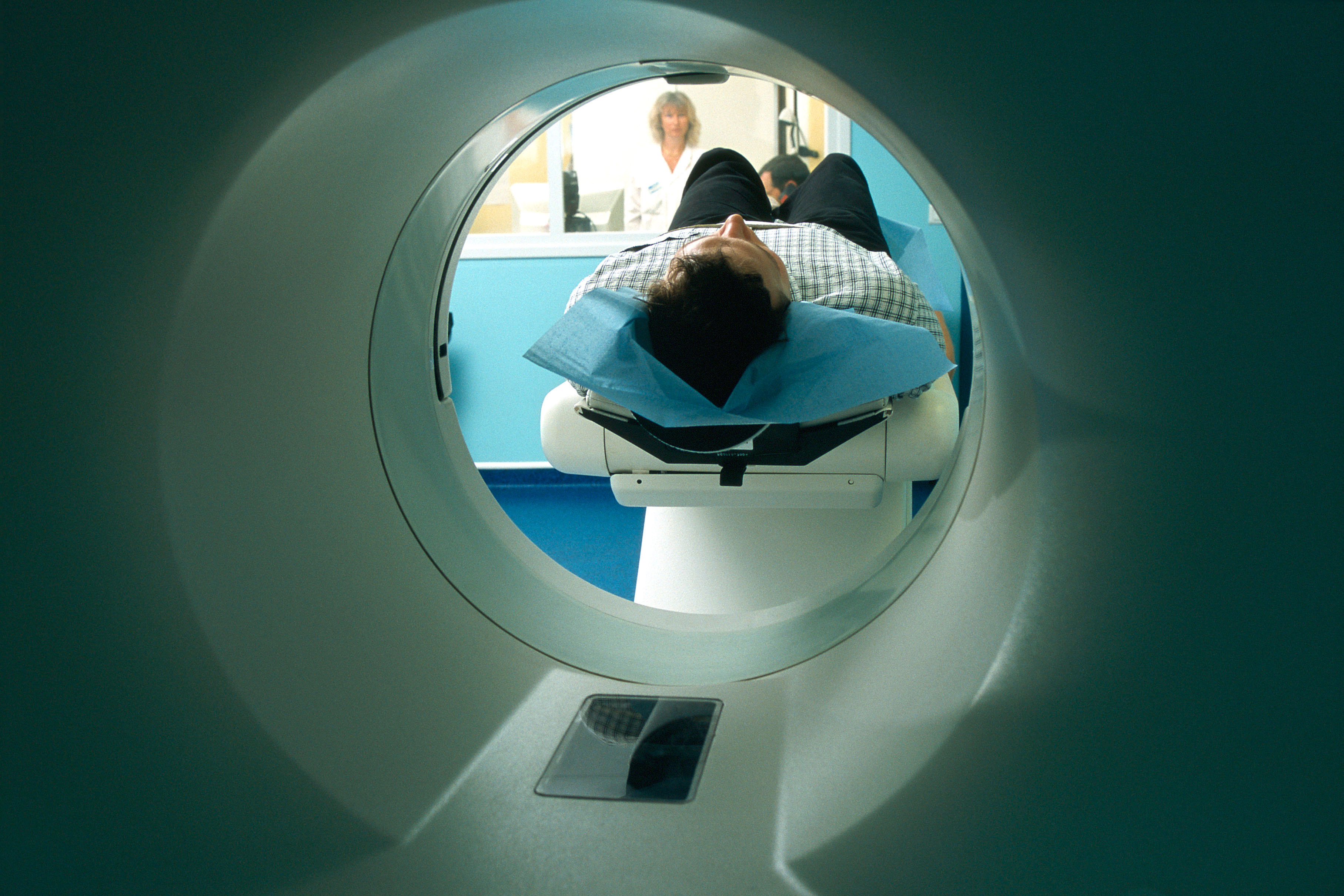
An MRI scanner is often shaped like a tunnel, with a table for a person to lie on that slides through the middle. The scanner uses strong magnetic fields and radio waves to create signals from the body. These are picked up by a radio antenna and processed by a computer to create detailed pictures.
The benefits of an MRI are that:
- it produces very detailed pictures
- does not use x-ray radiation
- is painless
When is an MRI scan used?
An MRI is used to show certain problems, such as an injury. MRIs can also be used to diagnose some conditions, in combination with other tests.
An MRI scan can be used to examine the:
- brain and spinal cord
- bones and joints
- breasts
- heart and blood vessels
- internal organs such as the liver, uterus (womb) or prostate gland
An MRI is generally used for investigation, diagnosis and planning of treatment of:
- tumours
- joint injury or disease
- strokes
- soft tissue injury
- internal organ damage
Is an MRI safe?
An MRI is a very safe procedure, but there are some things you should consider before the scan.
You will need to lie still in a small space, which some people find hard. Most scans take more than 10 minutes and can last up to 2 hours or more.
If you have claustrophobia (are afraid of small or tight spaces), make sure you tell the MRI team first. You may be able to have medicines to keep you calm during the scan. Sometimes you can take a CD or DVD into the scan with you to keep your mind busy. Young children and babies may need a general anaesthetic to keep them still.
Is an MRI scan right for me?
Some people cannot have an MRI, for example, people with specific types of pacemakers or certain implants. This is because metal interacts with the magnet and can cause serious harm to the patient. Metallic objects in the room are attracted to the MRI magnet and can fly towards it rapidly. This can harm the person wearing the metal item.
Make sure you tell the doctor who orders the scan and the radiology practice if you have a:
- pacemaker
- aneurysm clip
- heart valve replacement
- neurostimulator
- cochlear implant
- an implant that may have a metal part
You should also tell your doctor and the radiology practice if you have:
- metal fragments in your eye
- metal foreign bodies
- magnetic dental implants
- a medicine infusion pump
- medicine patches (for example, for menopause, to help you quit smoking, or others)
If you have one of these, you may still be able to have an MRI scan. Sometimes your doctor will need to order a different type of scan.
Make sure you do not wear any makeup or hairspray when you have your MRI scan. These may contain tiny metal particles that may interfere with the scan, heat up or even burn you. Let your doctor know if you have a tattoo because some tattoo inks contain metal particles and can also cause irritation.
Having an MRI is generally safe during pregnancy, but not in early pregnancy, so discuss your situation with your doctor. If it is possible, they may decide to delay your MRI until after your pregnancy.
ASK YOUR DOCTOR — Preparing for an appointment? Use the Question Builder for general tips on what to ask your GP or specialist.
Where can I get an MRI scan?
MRIs are done in most public and private hospitals, as well as in radiology practices. You need a referral from your doctor to get an MRI.
The scan is conducted by a radiographer who is specially trained. The images are then shown to a radiologist, a specialist doctor who can interpret the findings and provide a report to your doctor.
FIND A HEALTH SERVICE — The Service Finder can help you find doctors, pharmacies, hospitals and other health services.
What happens during an MRI scan?
Before the scan, you may be asked to fast (go without food). You will be asked about any metal in your body. Talk to the staff when you make your appointment if you:
- might be pregnant
- have kidney problems
- have asthma
- have allergies
- do not like closed spaces
You will be asked to change into a gown and put your personal items in a safe locker. You may also need to remove your underwear, as some underwear contains metal. Depending on the scan, you might or might not need to have an injection of dye to help the tissues show up in your MRI imaging.
You will then lie on a table and be given a buzzer to hold. When you press the button, you can talk to the radiographer, who is in another room. You will also be given earplugs or headphones to protect your ears, as the MRI scanner is very noisy.
Depending on the scan, you may have:
- leads placed on your chest to check your heartbeat
- a plastic tube attached to your finger to check your breathing and heart rate
- a needle inserted into a vein if any medicine is needed during the scan
The part of the body that is being scanned will be put into position and gently secured. Special coils are placed around it, usually in a pad or frame, to pick up signals from your body for the computer to create the images.
During the scan, the table moves in and out of the tunnel in the MRI scanner.
What does an MRI scan feel like?
An MRI scan is painless. Some people may feel warm during the scan. If this happens, make sure you tell the radiographer.
Tell the radiographer if you feel a burning or tingling sensation during the scan.
Are there side effects or complications of an MRI scan?
There are no known side effects of MRI if implants or objects don't go in the scanner without first being checked by the health team.
After the scan, you will be able to carry on with your day as normal.
If you needed sedation or medicines during the scan, you might have side effects or feel drowsy. The staff will tell you what to do and whether you can drive.
Complications of MRI scans may include:
- physical harm if safety procedures on metal are not followed
- allergic reaction to the contrast dye
- worsening of kidney function after contrast dye
- panic attacks if you have claustrophobia
Are there alternatives to an MRI scan?
Alternatives to an MRI scan include other imaging such as:
Your health team will recommend the best scan, based on your circumstances.
Resources and support
Inside Radiology has information about magnetic resonance imaging (MRI) scans, how they work and what happens during an MRI scan.
Healthy WA also has advice on types of MRI scans, benefits, risks, preparation and costs.
The Department of Health, Disability and Ageing has a map showing Medicare-eligible MRI locations.
You can read more about paying for diagnostic tests.
You can also call the healthdirect helpline on 1800 022 222 (known as NURSE-ON-CALL in Victoria). A registered nurse is available to speak with you 24 hours a day, 7 days a week.
Learn more here about the development and quality assurance of healthdirect content.
Last reviewed: August 2025


